
ftir portable spectrometer market
FTIR Portable Spectrometer Market: How to Build an Evidence-Based Research Shortlist
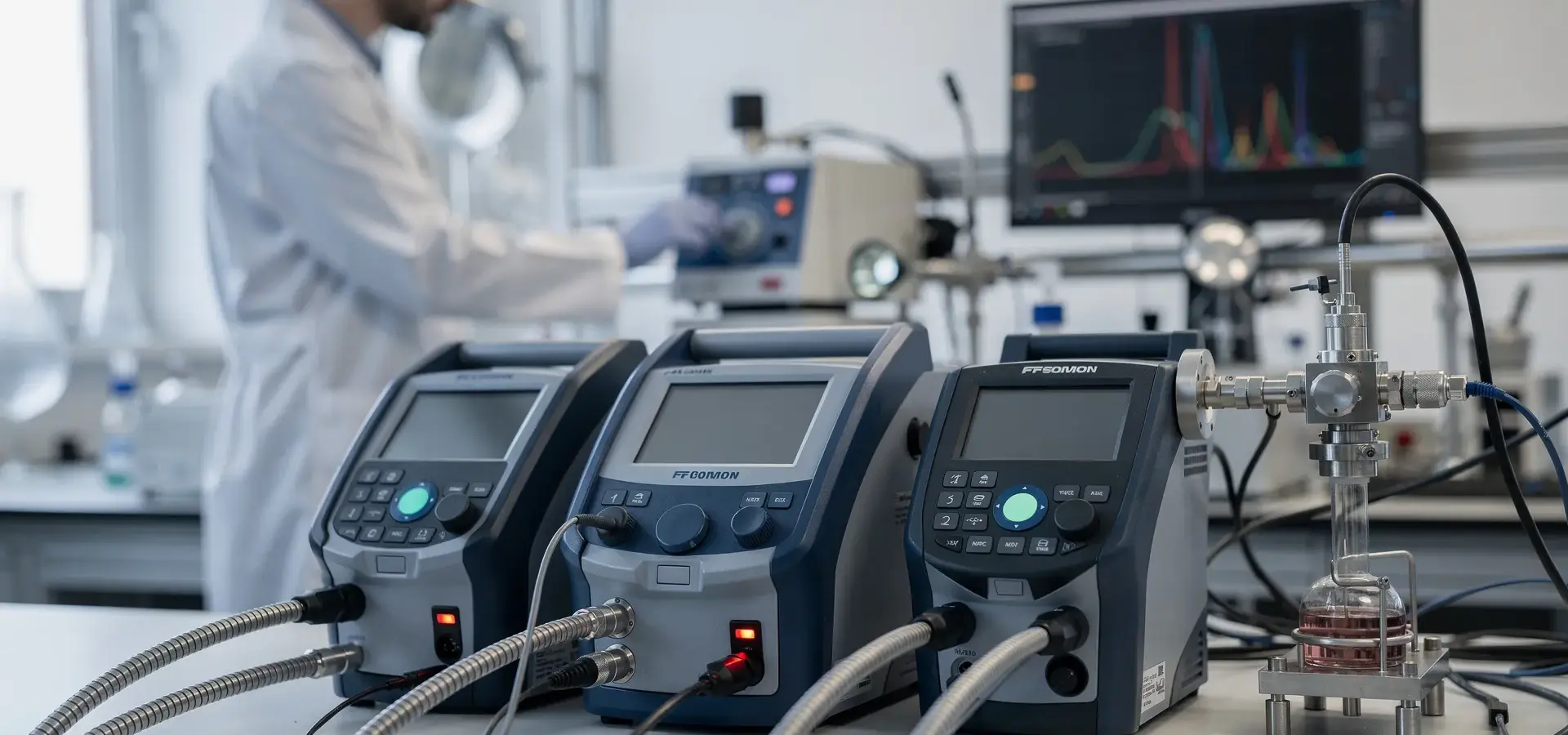
Frame the market around what must be measured and where
The portable FTIR spectrometer market begins with a measurement question, not a product list. FTIR spectrometers measure infrared absorption and are used for materials, chemistry, and polymers. An FTIR spectrum plots absorption intensity against wavenumber, with peaks corresponding to specific molecular vibrations; comparing those peaks with reference spectra or spectral databases can help identify functional groups and deduce chemical composition. FTIR is also described as a non-destructive, rapid, and precise form of infrared radiation spectroscopy.
That physical measurement principle does not make every infrared instrument interchangeable. A portable spectrometer supports field or on-site measurements, while a handheld spectrometer emphasizes mobile identification and screening. A benchtop instrument may be the better comparison point when your work stays in a laboratory and depends on controlled sampling, resolution, throughput, or accessories. A portable gas analyzer is another distinct path when the sample is an extracted gas stream rather than a solid, liquid, or surface.
Use four questions to define the category before you search supplier pages:
- What is measured? Identify the material, compound, gas, or process variable and whether you need identification, quantification, or both.
- Where is the measurement made? Separate a laboratory bench, a mobile laboratory, a production floor, a field site, and a remote location.
- How does the sample reach the optics? The relevant route may involve a surface interface, a cell, reflectance, transmission, or an extractive gas path.
- What must happen after acquisition? A screening result, a library match, a concentration estimate, and a research dataset impose different workflow requirements.
Portable FTIR instruments function on the same principles as benchtop FTIR instruments, while a self-contained design can enable field analysis. Torontech’s listed categories illustrate the range you may encounter: benchtop, portable or transportable, handheld, handheld FTIR-and-Raman, and portable gas-analyzer systems. Treat Raman, NIR, mass spectrometry, and other adjacent technologies as separate comparison categories unless your measurement brief deliberately includes them.
Supplier examples show why the label alone is insufficient. Torontech lists the ToronFTIR 7800 as a benchtop model covering 7,800 to 350 cm⁻¹ for high-resolution material identification and quality control, while its R4000 is a compact benchtop model covering 4,000 to 400 cm⁻¹ for rubber and polymer identification. Those descriptions identify intended categories and stated coverage; they do not establish that either model fits your analyte, matrix, or sampling path. A reported experiment coupled radiation from a ceramic source into a Bruker Vertex 70v FTIR spectrometer at 1300 K, which likewise illustrates an experimental configuration rather than a portable-market recommendation.
The useful starting point is therefore a measurement-and-location brief. Once you define those two dimensions, you can compare the market’s form factors without treating portability as a substitute for analytical fit.
Map the demand across applications and regions
Portable FTIR demand is tied to situations where chemical information is needed close to the sample. A market report attributes growth to applications in pharmaceuticals, environmental monitoring, and food and beverage, together with demand for on-site analysis and rapid detection of chemical compounds. Another market report describes compact portable systems being used for chemical analysis at pharmaceutical production lines, forensic sites, and remote environmental testing zones.
For academic and photonics research, the relevant question is not whether a market is growing in the abstract. It is whether your work benefits from moving the measurement to the sample, reducing transport between a site and a central laboratory, or repeating measurements across locations. A materials researcher may need a mobile identification workflow; a process researcher may need a transportable system near a pilot rig; a trace-gas researcher may need a dedicated gas path, remote operation, or non-contact geometry.
The application map spans several distinct use patterns:
- Materials and polymers: Portable systems are used for materials, polymers, food, art, historical artifacts, and pharmaceutical applications. External reflectance can support polymer-coating verification and analysis of paints and primers, while specular reflectance can measure metal oxide-layer thickness during anodization.
- Quality and maintenance work: Portable FTIR systems are described as practical for multi-facility quality audits, on-site machinery oil-breakdown tracking, and continuous environmental monitoring.
- Process and bioprocess work: A transportable configuration may support research across processing lines, temporary field laboratories, or distributed industrial sites, but the sampling interface and process connection still determine whether the instrument is usable.
- Trace-gas and emissions work: The selected gas-analyzer source associates demand with continuous emission monitoring, environmental regulation, industrial safety, and use in oil and gas, chemicals, and power generation.
These are not one market use case. A handheld material-identification workflow and an extractive gas-analysis workflow may both be described as portable FTIR, yet they require different sample interfaces, validation evidence, operating procedures, and data interpretation.
Regional signals should be used as orientation rather than as a purchasing shortcut. A separate report identifies pharmaceuticals, food safety, environmental monitoring, and defense as sectors becoming strategically important between 2026 and 2032.
For work spanning North America, South America, Europe, or Asia, translate those broad signals into local operating questions. Ask whether the instrument must work in a field laboratory, beside a continuous-manufacturing line, or in a regulated pharmaceutical environment. For petrochemical or gas work, define the site conditions and any classified-area requirements before treating a portable enclosure as suitable. Regional demand can explain why suppliers offer a category; it cannot establish availability, certification, performance, or fit at your site.
Separate market estimates by source, date, and category
Market figures are not interchangeable because the reports use different scopes and categories. The report was retrieved on November 11, 2026, and its publication date was not supplied, so treat these as that report’s estimates rather than as a reconciled market total.
The same report estimates that handheld FTIR spectrometers represented roughly 55%–60% of the global portable FTIR market in 2025. Its forecast model uses approximately 58% of the 2025 market, equivalent to around USD 667 million, and estimates a 7.4% CAGR during 2026–2032. It separately estimates that portable benchtop FTIR systems represented 42% of the same 2025 market, or approximately USD 483 million, with an estimated 6.0% CAGR through 2032. The handheld and portable-benchtop figures belong to that report’s segmentation model; do not combine them with another report’s categories without checking the definitions.
Regional and application-specific figures describe different populations. The market report states that the combined LAMEA market accounted for 12% of the portable FTIR market, equal to approximately USD 138 million in 2025, and estimates a 7.3% CAGR during 2026–2032. The 12% figure measures the combined LAMEA share in that report, not a global share for every FTIR category.
Spherical Insights reports that the FTIR gas analyzer market is projected to grow from USD 2.72 billion in 2025 to USD 6.29 billion by 2035, at an 8.74% CAGR during 2026–2035. That figure covers the FTIR gas analyzer market, not necessarily every portable FTIR spectrometer used for solids, liquids, or general materials. The distinction matters if your work concerns trace gases: a gas-analyzer estimate may be relevant context, but it should not be presented as the size of the broader portable FTIR market.
A broader infrared estimate gives still another scope. The report says the IR spectroscopy market was valued at USD 0.43 billion in 2023 and is expected to reach USD 0.904 billion by 2032, with an 8.6% CAGR over 2024–2032. Those figures describe the broader IR spectroscopy market and were published in 2022 with figures referencing 2023 and the 2024–2032 forecast period.
Use the estimates in a source register with five fields: market definition, geographic scope, reference year, forecast period, and measurement category. Mark each value as a reported figure or estimate. Do not use a forecast to rank suppliers, infer an instrument’s performance, or justify a purchase. A defensible shortlist needs a narrower bridge from market category to your actual sample, operating environment, and acceptance test.
Match each research task to a portable form factor
Portable FTIR form factors represent different compromises between access, control, and workflow. A handheld system is oriented toward mobile identification or screening. A portable or transportable system is more suitable when you move analysis between benches, sites, processing lines, or temporary laboratories. A benchtop system remains the relevant reference when the work is performed in a controlled laboratory and the daily workflow rewards a stable installation. A dedicated gas analyzer follows the sample path of an extractive gas measurement rather than a general material-identification task.
The selection principle is to match optical precision, testing speed, and lifecycle costs to your daily workflow. Do not assume that a lighter instrument is automatically more suitable. Portability may matter for fieldwork or on-site analysis, but it becomes useful only when the sampling path, operator workflow, environmental conditions, and data handling remain workable.
| Form-factor lane | What the listed products show | Shortlist question |
|---|---|---|
| Handheld FTIR | Torontech describes the ToronFTIR H7800A as covering 7,800 to 650 cm⁻¹ for fast, non-destructive on-site material identification. | Do you need mobile identification at the sample, or quantitative research data under controlled conditions? |
| Handheld FTIR-and-Raman | Torontech describes the ToronFTIR H7800M as covering 7,800 to 550 cm⁻¹ in IR and 4,000 to 170 cm⁻¹ in Raman for customs, hazmat, and measurements through sealed containers. | Do both techniques address a defined measurement problem, or would the added technique complicate comparison? |
| Portable or transportable FTIR | Torontech describes the ToronFTIR P7800 as covering 7,800 to 350 cm⁻¹ for analysis moved between benches and sites. | Will the system travel often enough to justify transport, setup, and field-operation requirements? |
| Portable gas analyzer | Torontech describes the ToronFTIR G12000 as covering 600 to 4,500 cm⁻¹ for extractive FTIR analysis of stack emissions and VOC. | Is the required gas path, extraction method, and analyte coverage defined before comparing general FTIR systems? |
Build the first shortlist by workflow lane, not by supplier reputation. For each candidate, record where the measurement occurs, how the sample reaches the instrument, whether the output is identification or quantification, and what must be carried, installed, or connected. A transportable configuration can support research-grade evaluations across processing lines, temporary field laboratories, and distributed industrial sites, but that description is not a guarantee of sensitivity, resolution, or application performance in your environment.
Choose the lane that removes the largest practical constraint. If the constraint is access to a remote sample, investigate handheld or transportable systems. If it is a gas stream, investigate the gas-analyzer path. If it is controlled quantitative work, keep benchtop systems in the comparison even when field mobility is attractive.
Specify the optical and sampling requirements before comparing models
The optical specification should follow the analyte and matrix. Before comparing models, write down the required spectral or wavelength range, resolution, signal-to-noise ratio, detector options, expected concentration range, sample temperature and pressure, and the measurement frequency.
Sampling deserves equal attention. FTIR spectroscopy can use application-specific accessories, including ATR-FTIR and FT-PL accessories. Depending on the sample, you may need contact with a surface, a controlled path length, diffuse or specular reflectance, transmission, or an extractive gas cell. Ask suppliers to describe the complete interface, not only the spectrometer body. A stated spectral range is not evidence that the instrument can measure your target compound at the required concentration through your matrix.
Use this specification checklist for every candidate:
- Required spectral range and the portion used by the analyte or gas.
- Resolution, signal-to-noise ratio, detector type, and the conditions under which each value was measured.
- Sample interface, accessory, path length, contact method, and cleaning or replacement requirements.
- Expected concentration range, matrix composition, moisture exposure, temperature, pressure, and flow conditions.
- Acquisition time, data output, software, library access, export format, and compatibility with your analysis workflow.
- Maintenance, training, calibration, application support, and any equipment needed beyond the instrument.
Advanced features such as higher resolution and enhanced sensitivity, together with additional accessories, can increase pricing. That makes a complete specification sheet more useful than a headline claim. Request comparable conditions for every number so you are comparing like with like.

Trace the sample and data path into the research workflow
A portable instrument becomes useful only when the sample path remains representative. External reflectance sampling can support polymer-coating verification and analysis of paints and primers on substrates. Specular reflectance can measure metal oxide-layer thickness during anodization. A field-portable diffuse-reflectance FTIR study reported soil spectra comparable to those from benchtop systems, while benchtop and handheld ATR-MIR spectrometers achieved regression coefficients exceeding R² > 0.9 in reported edible-oil verification models.
These examples show why the interface belongs in the shortlist, but they do not transfer automatically to your experiment. Ask whether your sample has the same surface, moisture, particle, concentration, and preparation conditions as the supplier’s application data. Moisture can affect infrared analysis and may interfere with results, so sample preparation and handling may require explicit control.
The data path should be documented from raw interferogram or spectrum to the result you intend to use. Comparing peaks with reference spectra or spectral databases can identify functional groups and help deduce chemical composition. Baseline correction, noise reduction, and spectral subtraction are often used to improve FTIR spectra, while peak fitting, spectral deconvolution, and multivariate analysis can provide further insight into complex samples. FTIR spectral data can support both qualitative and quantitative analysis, and software packages are available to process and interpret it.
For identification work, FTIR has high molecular selectivity and can support unknown-sample identification by spectral matching. Automatic search methods include peak picking, Euclidean distance, and first-derivative algorithms. The fingerprint region below 1400 cm⁻¹ contains the greatest number of unassigned vibrations and is especially useful for identification. For quantitative research, record preprocessing, reference methods, model version, sample split, and acceptance criteria rather than treating a library match as a concentration result.
Compare the data workflow with the same care as the optics:
- Define the raw data you need to retain and the result you need to report.
- Identify preprocessing steps such as baseline correction, noise reduction, or spectral subtraction.
- Decide whether library matching, peak fitting, spectral deconvolution, or multivariate analysis is appropriate.
- Specify how moisture, contamination, sample presentation, and repeat measurements will be recorded.
- Test whether the exported data can enter your existing research, quality, or process workflow.
A supplier may demonstrate a clean spectrum under controlled conditions while your application produces a complex matrix or unstable sample presentation. Keep the demonstration result, the processing method, and the final decision variable separate. That separation makes it easier to identify whether a failure arises from sampling, optics, preprocessing, calibration, or interpretation.

Treat trace-gas capability as an application-specific evidence question
Trace-gas research needs a narrower question than whether a portable FTIR instrument is available. A research paper describes a lightweight, compact passive-FTIR gas-detection system with wireless remote control and telemetry. The paper describes the system as capable of non-contact, high-sensitivity, real-time, high-efficiency gas detection and reports indoor gas-sensitivity tests as well as UAV-borne flight tests.
Those reported capabilities identify a relevant research direction, not a universal performance specification. The paper’s system, optical configuration, gas-identification method, test conditions, and deployment are part of its evidence. You should not transfer its claims to another instrument without testing the target gas, concentration range, background composition, path length, humidity, distance, motion, and required response pattern.
Put the following questions into a trace-gas evaluation brief:
- Which gas or gases must be detected, identified, or quantified?
- What concentration range and detection decision are required?
- Is the measurement contact-based, extractive, open-path, passive, or remote?
- What background gases, humidity, temperature, pressure, and optical path affect the spectrum?
- Must the system operate continuously, intermittently, or only during a field survey?
- Is wireless telemetry needed, and what data must be transmitted or retained?
- Which indoor, outdoor, industrial, or airborne test conditions represent the intended deployment?
Then request resolution, spectral range, signal-to-noise ratio, detector details, application data, maintenance needs, software behavior, and evidence supporting performance claims. A gas-analyzer category may be the right investigation lane, but the evidence package must address the actual gas path and environment.
Compare suppliers using equivalent evidence packages
Supplier pages provide starting points, not a ranking. Agilent offers handheld FTIR systems and benchtop FTIR instruments for routine testing and advanced research, and Agilent states that its instruments can be optimized with accessories and supplies including ATR and transmission FTIR options. A 2026 LabX review says infrared and FTIR systems offer speed and connectivity and describes selected models as combining automation with rugged durability for high sample volumes or field mobility.
Keep each statement in its proper class: a supplier description, a review description, or your own application requirement. Do not convert a listed form factor into proof of sensitivity, qualification, field reliability, or suitability for trace-gas work. An equivalent evidence package makes supplier claims easier to compare; it is not a performance ranking.
Request the same evidence package from every candidate:
- Instrument configuration, spectral range, resolution, signal-to-noise ratio, detector, and measurement conditions.
- Sampling interface, accessories, sample preparation, cleaning, and consumables.
- Application data using a matrix and concentration range comparable to yours.
- Raw-data access, software functions, libraries, preprocessing, model export, and integration options.
- Maintenance schedule, training requirements, calibration support, response procedures, and expected lifecycle costs.
- Environmental limits, installation conditions, transport requirements, and any qualification or regulatory documentation relevant to your site.
Portability may be significant for fieldwork or on-site analysis, but it should be evaluated alongside the daily workflow. Ask each supplier to identify which results come from direct application testing, which are demonstrations, and which are specifications measured under controlled conditions.
Convert instrument price into a complete evaluation budget
The price figures give a starting range rather than a universal quote. Our published comparison places entry-level FTIR models at around $15,000 and high-end models in a range of $35,000 to $60,000. The same comparison says high-quality FTIR spectrometers often require an upfront investment between $15,000 and $60,000, which can be a barrier for smaller organizations or organizations with limited budgets.
The figures describe instrument price orientation, not the cost of a complete research or process measurement system. A quote can change when the required configuration adds sampling hardware, detectors, accessories, software, installation, training, calibration, application work, or support. Ask for each item separately so you can distinguish the base instrument from the measurement chain.
Price differences can arise from several identifiable requirements:
- Optical and detection requirements: Higher resolution and enhanced sensitivity can increase pricing.
- Sampling and accessories: A specialized interface or additional accessory can change the configured cost.
- Brand positioning: Our published comparison says established brands such as Bruker and Thermo Fisher often command higher prices because of their stated market reliability and performance positioning.
- Training and operation: Some FTIR models may require specialized training to operate effectively.
- Application complexity: Moisture can affect infrared analysis and may interfere with results, so preparation and handling requirements may add work around the instrument.
Treat that as a market observation, not as a reason to choose a lower-cost instrument without testing the measurement.
Build a comparison budget with four layers:
- Acquisition: instrument, detector, sampling interface, accessories, software, and required computer or connectivity components.
- Application setup: sample preparation, installation, method development, calibration, representative testing, and operator training.
- Operation: consumables, cleaning, maintenance, recalibration, data management, and service support.
- Decision risk: the cost of an unsuccessful application test, an unsuitable sample path, or a configuration that cannot meet the required workflow.
The relevant commercial comparison is lifecycle cost against the work the instrument must perform. A portable system may reduce sample transport or make distributed measurements practical, while a benchtop system may fit a controlled laboratory workflow more directly. Compare those consequences with the same assumptions rather than comparing purchase prices alone.
Require application testing and calibration evidence before selection
A brochure comparison should end with an application test. Define representative customer samples, the expected concentration range, sample conditioning, replicates, target outputs, acceptance criteria, and the reference method before you compare results. The calibration set must span the range of expected concentrations, including the extremes. Predicted values cannot be more accurate than the reference method used for training, and the model’s accuracy floor is determined by that method’s reproducibility.
Ask how the supplier’s application data was generated, which samples were used, how the reference values were obtained, and whether the reported result measures identification, concentration prediction, repeatability, or another property.
Regulated pharmaceutical work adds a qualification question. Pharmacopeial requirements for infrared instrument performance are not harmonized; differences include the properties of polystyrene reference material and the limits applied to peak positions. MicroLab OQ software may not cover some pharmacopeia tests and limits; when that occurs, MicroLab PC can be used to verify instrument performance. MicroLab PC is described as method-driven software that uses the same picture-guidance as MicroLab OQ to guide users through the analysis steps.
Define the applicable jurisdiction, pharmacopoeial chapter, reference material, limits, software environment, records, and approval path before accepting a qualification statement. Do not assume that an OQ workflow covers every test required for your site. For North American, European, Asian, or other regulated operations, map the instrument evidence to the requirements that actually govern the installation.
Use a written application-test plan with these sections:
- Measurement: analyte or gas, matrix, concentration range, spectral region, and sampling interface.
- Conditions: temperature, pressure, moisture, flow, handling, and intended operating environment.
- Reference: reference method, reproducibility, calibration-set coverage, and concentration extremes.
- Output: identification or quantitative result, preprocessing, model metrics, repeatability, and failure criteria.
- Workflow: operator steps, raw-data retention, software, maintenance, training, and integration.
- Decision: what result permits progression, what result requires configuration changes, and what result ends the evaluation.
Those are supplier-specific options to discuss within the same application-test structure, not substitutes for defining your test.
Keep supplier-specific options in their supported category
Our OrionIR® Lab version is designed for recirculation loops off a reactor, side streams on pilot rigs, and bench setups. Our OrionIR® High-Pressure Version uses the same measurement principle as the Lab version, allowing chemometric models built during evaluation to transfer to the pressurized installation.
Our OrionIR® instrument does not use optical fibres, eliminating limitations from mid-IR transmission and the risk of fibre breakage. These are configuration and measurement facts for the OrionIR® line. They do not, by themselves, classify OrionIR® as a portable FTIR spectrometer or establish performance for a field, handheld, or trace-gas application.
We have field-tested the OrionIR® under industrial conditions in North America, South America, Europe, and Asia. That field-testing statement gives you a reason to ask about the conditions, streams, installation arrangements, and results relevant to your own work; it does not replace application-specific testing. A process researcher should still define the stream, chemistry, pressure, flow, concentration range, sample interface, and required output before treating the field-testing experience as relevant evidence.
A focused Paeonia Innovations discussion can begin with the information that determines compatibility and configuration:
- Stream composition, analytes, matrix, and expected concentration extremes.
- Reactor, pilot-rig, recirculation-loop, bench, or pressurized installation context.
- Required spectral region and measurement frequency.
- Sampling route, moisture conditions, pressure, flow, and access constraints.
- Reference method, calibration coverage, model output, and acceptance criteria.
The useful boundary is clear: treat OrionIR® as a supplier-specific process-measurement option, then test whether its stated configuration matches your measurement brief. Keep the broader portable FTIR shortlist separate until the form factor, sample path, and deployment requirements have been established.
Seek qualified evaluation when fit remains unresolved
Escalate the evaluation when the remaining uncertainty could change the instrument category or the purchase decision. That point is reached when the target gas or analyte has not been tested, the matrix is strongly absorbing or moisture-sensitive, the sample interface is unproven, the calibration range does not cover expected extremes, or the reference method cannot support the required accuracy. It is also reached when a regulated site has not mapped the instrument tests to the applicable pharmacopeial requirements.
Ask for specialist review when portability, spectral coverage, sensitivity, resolution, workflow, and lifecycle cost cannot be reconciled through published specifications. The purpose of that review is to define a testable configuration and acceptance plan, not to obtain a universal ranking. A supplier should be able to explain resolution, spectral range, signal-to-noise ratio, detector options, software, maintenance, application data, and the evidence behind performance claims.
Before narrowing the shortlist, write down the unresolved question and the evidence that would answer it. For example:
- If the question is gas sensitivity, define the gas, background, path, concentration range, and test environment.
- If the question is process compatibility, provide the stream and chemistry and request a configuration discussion.
- If the question is quantitative accuracy, define the reference method, calibration range, extremes, and reproducibility.
- If the question is regulated use, identify the jurisdiction, applicable performance tests, limits, records, and qualification path.
Proceed only when the evidence request is specific enough to produce a comparable result. Otherwise, keep the candidate in an investigation queue rather than presenting it as a recommendation.
Prepare the next supplier conversation
Include the analytes or gases, matrix, concentration range, sample path, spectral coverage, resolution and signal-to-noise requirements, operating environment, portability need, software workflow, reference method, calibration expectations, qualification context, lifecycle budget, and the result that would make the evaluation successful.
Use market reports to understand categories and reported demand, supplier pages to identify candidate configurations, and application testing to decide whether a configuration fits your work. General market analysis can narrow the search, but it cannot make an application-specific purchase decision. A qualified professional should decide individual suitability for a consequential installation or regulated use.
What should you confirm before comparing portable FTIR spectrometers?
Can a portable FTIR spectrometer be used for trace-gas detection?
It can be relevant, but suitability depends on the gas path, optical geometry, target concentration, background composition, humidity, path length, and required response. Research has described compact passive-FTIR systems with non-contact, real-time detection and wireless telemetry, but those results do not establish performance for another instrument. Require application testing under representative conditions before selection.
When should a benchtop FTIR remain in the comparison?
Keep a benchtop system in the shortlist when measurements occur in a controlled laboratory and the work depends on stable sampling, resolution, throughput, accessories, or quantitative research data. Portability is more important when samples must be measured across sites, processing lines, or temporary field laboratories. Compare both against optical requirements, testing speed, sampling practicality, and lifecycle cost.
How can I tell whether two supplier specifications are genuinely comparable?
Check that resolution, spectral range, signal-to-noise ratio, detector, acquisition conditions, sampling interface, concentration range, and data-processing method were measured under equivalent conditions. Also request application data using a comparable matrix and reference method. A listed form factor or headline specification does not establish sensitivity, repeatability, qualification, or suitability for trace-gas work.
What must an application test establish before purchase?
Define the analyte or gas, matrix, concentration range including expected extremes, sampling route, operating conditions, replicates, reference method, output, and acceptance criteria. The test should distinguish identification from quantification and document preprocessing, repeatability, calibration coverage, and failure conditions. Predicted values cannot be more accurate than the reference method used to train the model.