
Paeonia Innovations
Paeonia Innovations: Trace-Gas Detection, Photonics Research Relevance, and What to Confirm
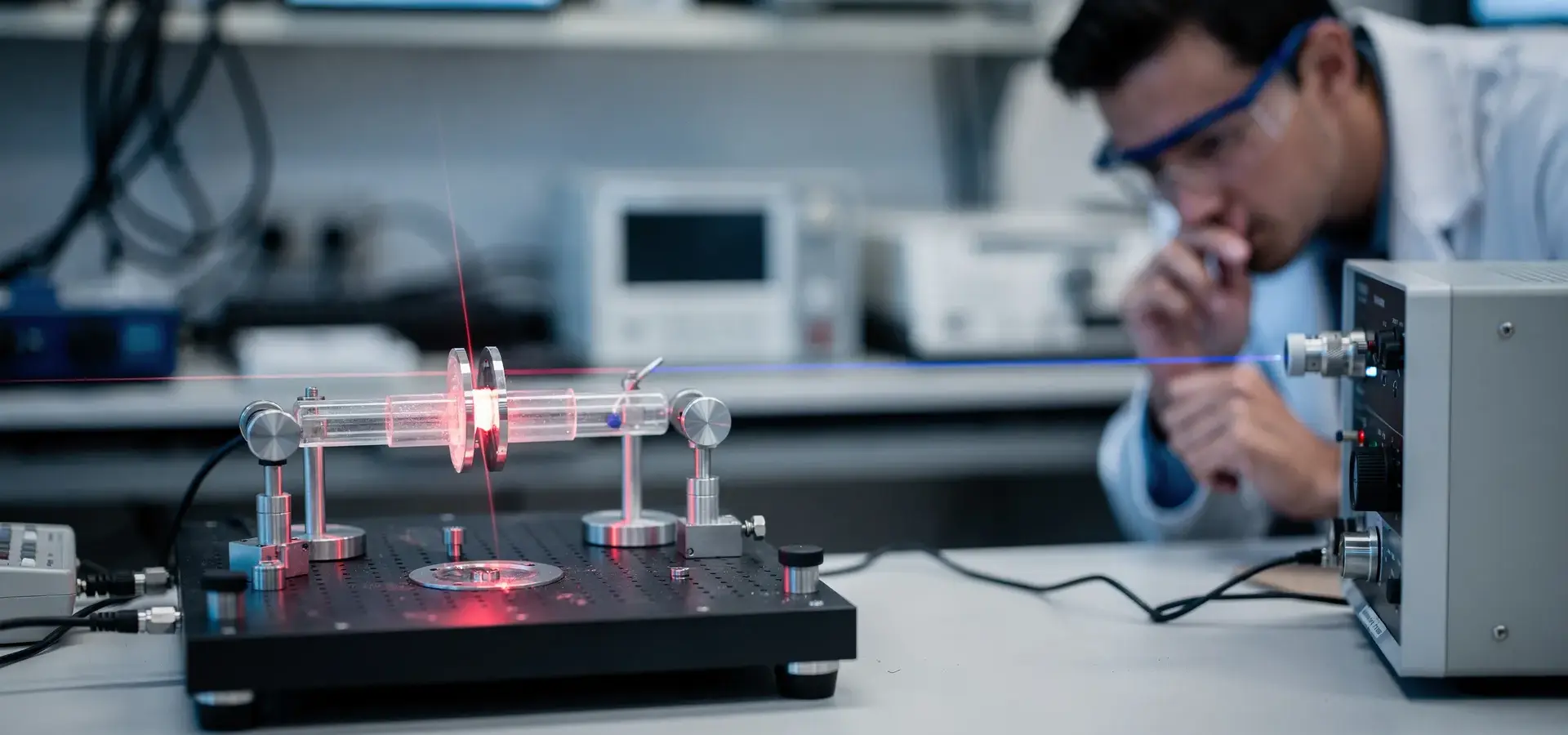
Identify Paeonia Innovations and its Singapore research relevance
Paeonia Innovations is a Singapore-based company focused on chemical-sensing solutions for technical and industrial applications. Paeonia Innovations Pte Ltd was founded in April 2023 as a spin-off from A*STAR’s Innovation & Enterprise division. Its stated areas include chemicals, pharmaceuticals, petrochemicals, food processing, and specialty chemicals, giving you a starting point for assessing whether its work overlaps with your laboratory, process-development, or product-development needs.
The company’s relevance to photonics research comes from the combination of chemical measurement and optical technology rather than from a general instrument catalogue alone. The stated work spans chemistry, optics, semiconductors, and software, while the portfolio includes OrionIR® mid-infrared spectroscopy and K2 Photonics dual-comb lasers. That combination can make the organization relevant if your question involves gas absorption, chemical composition, compact spectroscopy, or the development of a measurement system around a particular sample or process.
Your first distinction should be between the organization’s stated areas and the fit of a specific configuration. We have expertise across chemistry, optics, semiconductors, and software, but that statement does not by itself establish that a particular instrument will meet your species, matrix, concentration, environmental, or integration requirements. A company profile also states that the business operates with a focused team of 10, including experienced consultants; treat that as organizational context, not as a substitute for a technical assessment.
For a researcher in Singapore, Europe, the Americas, or Asia, the useful question is therefore specific: does the stated combination of trace-gas sensing, mid-infrared measurement, and photonics address the measurement problem in front of you? The rest of this guide connects those offerings to the variables you should prepare before asking for a scoped discussion.
Map the stated portfolio to trace-gas and photonics work
Our stated portfolio connects three related areas: trace-gas detection through comb-based sensing at low concentration, OrionIR® for continuous chemical measurement, and K2 Photonics dual-comb lasers for trace-gas and high-resolution absorption applications. These areas answer different parts of a research question. Trace-gas detection describes the measurement objective; a mid-infrared spectrometer describes a compact chemical-measurement route; and a dual-comb laser concerns the optical source and the spectral information available for absorption work.
That distinction matters if you are developing an experiment or a product rather than looking for a general-purpose instrument. You may be evaluating an optical source for gas spectroscopy, a compact spectrometer for repeated chemical measurements, or a broader arrangement that connects sampling hardware, acquisition, and analysis. Start with the result your work requires, then identify which part of the portfolio is relevant.
K2 Photonics includes a 60 MHz single-cavity ASOPS laser that can scan up to roughly 20 ns of optical delay at high speed. That figure describes the optical-delay scanning capability of the specified laser; it is not a general performance statement for every K2 Photonics configuration, every gas measurement, or the complete experimental workflow.
A photonics researcher can use this distinction when framing an inquiry. State whether you need an optical source, a gas-absorption measurement, a compact chemical analyser, or an integrated arrangement. Then describe the spectral region, target species, pressure and temperature conditions, and intended acquisition or control method. Those details determine whether the relevant discussion concerns the source, the spectrometer, the sample path, or a combination of them.

Understand why resolved gas absorption matters
Resolved gas absorption matters because gas-phase absorption lines may be highly specific when the measurement resolves them. The relevant lines are narrow and, at low pressure, largely unblended, so spectral resolution affects whether a feature can be distinguished from nearby features. The qualification is essential: narrow lines do not automatically make every measurement specific, because the measurement must resolve the feature under the conditions in which you are working.
Your application brief should therefore identify the target species, expected pressure, concentration range, temperature, and any gases or matrix components that may affect the spectrum. A line that is distinguishable in one laboratory arrangement may require a different sampling path or measurement condition in another. The technical question is not simply whether a gas has an absorption feature; it is whether the proposed measurement can resolve and interpret that feature in your sample setting.
Comb-based sources deliver the resolution and broad coverage needed to identify several species in one acquisition. That capability can be relevant when your experiment concerns a mixture rather than a single isolated gas, or when you need to observe several absorption regions without changing the measurement route between species.
Several species in one acquisition does not remove the need to define the analytical question. Specify which species matter, what concentration range you expect, whether the sample is static or flowing, and what reference method will be used for comparison. The source and optical design address the available spectral information; your sample path, environmental conditions, and interpretation method still determine how that information can be used.
Relate OrionIR® to the measurement setting
Our OrionIR® is 5 × 5.5 × 6 cm and uses no moving components or fragile optical fibres. Those are physical and construction details of the stated OrionIR® design. They may be relevant when you are considering where a measurement unit could sit in a laboratory or process arrangement, but the dimensions alone do not establish that the instrument will fit your full installation, sample interface, environmental enclosure, or control system.
Use the physical description as an early screening point rather than as a complete deployment conclusion. Record the available space, the route from sample to optics, the required connections, and the conditions around the measurement location. A compact instrument can still require a carefully specified sample path, mounting arrangement, controls, or supporting equipment.
For an initial discussion, describe the sample setting, flow conditions, sample composition, pressure, temperature, and sampling objective. A reactor-connected loop, pilot-rig side stream, or bench measurement can be stated in those terms.
Our OrionIR® held its spectral stability across a repeatability test of more than 100 days. That result belongs to the stated repeatability test and should not be expanded into an assurance about every installation, sample, environment, or operating period. If stability is consequential to your project, define the period, reference material, acceptance expectation, and comparison method you need to discuss.
Separate stated capability from application-specific suitability
Application-specific suitability is not determined by a product name alone. The relevant choice depends on your species, matrix, concentration range, accuracy, temperature, pressure, reference method, sample setting, and integration objective. Those variables turn a broad interest in trace-gas detection or laser spectroscopy into a technical question that can be assessed.
A useful fit check separates what you already know from what remains open:
- Target: name the gas, chemical feature, or set of species you need to measure.
- Sample: describe the matrix, flow or static condition, and available sample volume.
- Range: state the expected concentration range and the accuracy or comparison requirement.
- Conditions: record temperature, pressure, humidity, corrosive components, and other relevant environmental conditions.
- Reference: identify the existing method or measurement you will use for comparison.
- Integration: explain whether the work is a bench experiment, reactor loop, pilot side stream, or product-development system.
A stated capability can establish that a measurement area is part of the portfolio; it cannot establish suitability for an unexamined sample or operating condition. Comb-based sensing is offered for low-concentration trace-gas detection, and resolved gas-phase lines may support specificity, but your actual matrix and measurement conditions still control the fit question.
Treat unresolved details as questions to carry into the technical discussion rather than filling them with assumptions. Ask how your target species, matrix, concentration range, reference method, sampling arrangement, and integration objective would be addressed. That approach is more useful than selecting an instrument from a name, a compactness claim, or a general application label alone.
Use price information as context, not as a Paeonia Innovations quote
A published price comparison dated September 25, 2026 described high-end FTIR models as ranging from $35,000 to $60,000 and entry-level models as typically starting around $15,000. The figures describe published FTIR market context; they are not a current price for a particular Paeonia Innovations instrument, country, configuration, delivery arrangement, tax treatment, installation, or support package.
Use those amounts only to understand why a generic spectrometer price is a weak basis for planning. A trace-gas system may require a different optical route, sampling arrangement, integration scope, or validation package from the equipment represented by a broad FTIR comparison. Do not treat the published range as a quotation or as a budget for your specific application.
An infrared spectrometer quote can depend on several parts of the complete measurement system:
- Instrument and base configuration: optical unit, detector, beam splitter, software licence, computer or controller, and standard documentation.
- Sampling arrangement: cell, probe, gas interface, flow loop, pressure-rated parts, conditioning, filters, heating, cooling, or other sample accessories.
- Installation and integration: site preparation, physical installation, communications, data export, control-system connection, commissioning, and acceptance criteria.
- Calibration and chemometric work: sample requirements, reference analyses, model development, independent validation, residual monitoring, and later revalidation.
- Qualification or validation support: documents, tests, and responsibilities required by your site and quality system.
- Training, handover, and lifecycle support: operator training, procedures, warranty, spare parts, response arrangements, calibration certificates, software updates, and installation acceptance.
For a meaningful cost discussion, describe which of these elements your project needs. The price question then becomes a configuration question rather than a comparison of isolated instrument labels.
Prepare the information needed for a useful first discussion
A requirements brief gives us a concrete basis for discussing your research or product-development question. Include the application, target species or chemical feature, measurement conditions, reference method, sample setting, and integration objective in your requirements brief.
You can keep the first version concise. A practical brief should contain:
- Application: what experiment, process, or development task requires the measurement.
- Target: which species or chemical feature matters and whether several species must be considered.
- Conditions: expected concentration, temperature, pressure, flow, matrix, and other sample characteristics.
- Reference method: how you currently measure or intend to compare the result.
- Sample setting: bench, reactor recirculation loop, pilot side stream, or another arrangement.
- Integration objective: whether you need an optical source, a spectrometer, a sampling route, data output, or a broader system discussion.
Mark each value as known, estimated, or still open. That makes the boundaries of the question visible without implying that an unspecified detail has already been resolved.
The brief should connect your measurement objective to the conditions under which the result must be obtained. For example, a low-concentration gas experiment may require a different discussion from a continuous chemical measurement in a reactor loop, even if both use infrared absorption. A photonics development question may focus on optical delay, spectral coverage, or source architecture instead of a packaged chemical analyser.
Send the same core facts whether your work is in an academic laboratory, a semiconductor research environment, or a product-development programme. The application and target species define the question; the sample setting and integration objective define what must be discussed around the measurement.
Seek professional evaluation when measurement fit remains unresolved
Professional technical evaluation becomes appropriate when the measurement question still has material unknowns. Seek that evaluation if you cannot define the target species or matrix, if the concentration range is uncertain, or if temperature and pressure could affect the absorption measurement. The same boundary applies when the sampling route, reference method, integration requirements, or acceptance expectations remain unclear.
These are not administrative gaps. Each unresolved item can change the relationship between the optical measurement and the result you need. A named product or general application page cannot resolve a missing sample description, an undefined reference method, or an integration requirement that has not yet been stated.
Use the unresolved questions to structure the discussion rather than to make an unsupported selection. Write down the known values, identify the unknown values, and state what decision the measurement must support. Include the species, matrix, concentration range, accuracy, temperature, pressure, reference method, sample setting, and integration objective where they are available.
A defined technical question allows the discussion to address the relevant part of the portfolio. It may concern comb-based trace-gas sensing, OrionIR® continuous chemical measurement, a laboratory arrangement, or a K2 Photonics optical-source question. The boundary is clear: individual suitability requires evaluation against your stated requirements.
Send a requirements-led message to Paeonia Innovations
A requirements-led message is the practical next step when your work overlaps with trace-gas detection, OrionIR® chemical measurement, or K2 Photonics photonics applications. We offer consultations to discuss measurement processes, chemistry, and partnerships. Include your application, target species or chemical feature, measurement conditions, reference method, sample setting, and integration objective so the discussion starts with a defined question.
Our contact action is a message request, not a booked demonstration. You can also identify which details are known and which require discussion; that keeps the request precise without treating a product name or published FTIR price range as proof of application fit. A qualified professional should decide individual technical suitability after reviewing your requirements and operating conditions.
What should you clarify before contacting Paeonia Innovations?
What should a calibration set include for this measurement project?
For its calibration work, Paeonia Innovations requires the calibration set to span the expected concentration range, including the extremes. This is a Paeonia Innovations requirement for its own calibration work, not a universal rule for every supplier. The calibration discussion should also identify the reference analyses, sample matrix, required output, and how the model will be independently assessed.
Is there a standard timeline for configuring and installing an infrared measurement system?
There is no supported standard timeline for every project. Duration can depend on feasibility testing, representative samples and reference analyses, quotation, procurement, configuration, site preparation, delivery, installation, commissioning, calibration, validation, training, and handover. Request project-specific milestones and identify dependencies such as site readiness, network access, safety review, utilities, and sample availability.